
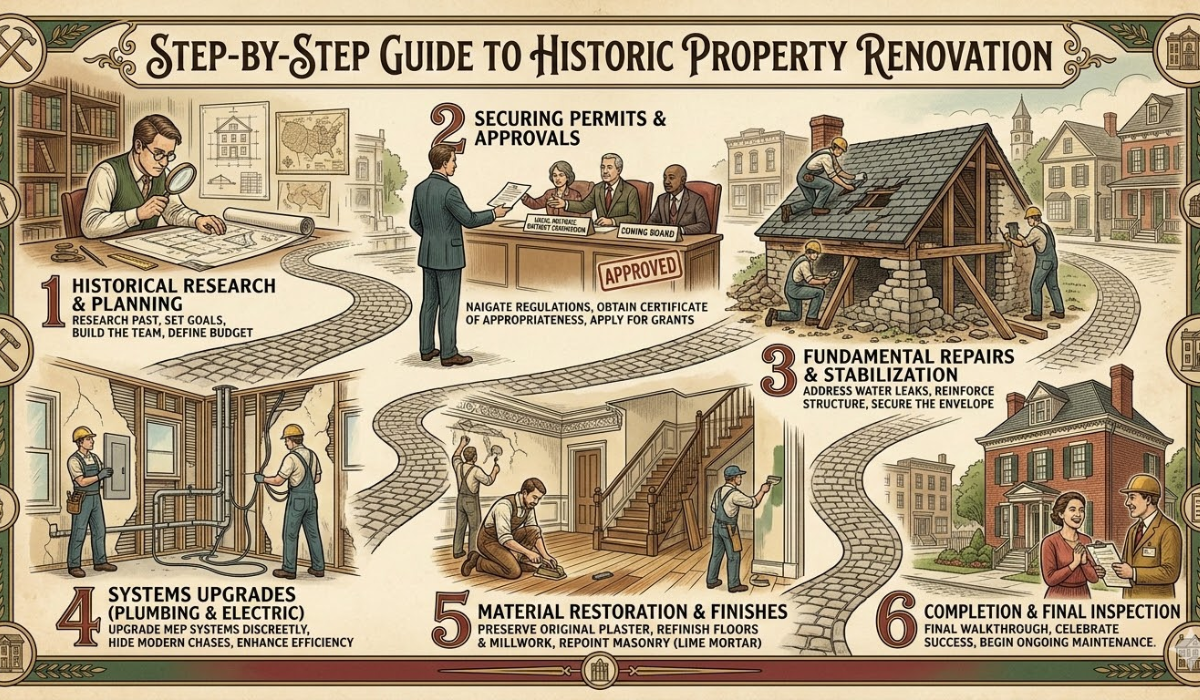
Old houses in Western Massachusetts have a way of attracting people. A wide-plank floor. A fireplace surround with hand-carved dentil molding. Windows with wavy glass because the glass was made when glass was still hand-blown. You walk through the door and something clicks.
The renovation of old homes is not the same thing as a kitchen remodel. Anyone who has done one will tell you that. The house has its own logic, its own quirks, its own set of things you simply cannot override without losing what made you want it in the first place. Getting it right means understanding that going in, not discovering it six months later when the project is half-finished and the budget is gone.
Here is how homeowners in the Pioneer Valley, the Berkshires, and across Western Massachusetts actually get through it.
What Does It Take to Do a Historic House Renovation the Right Way?
Most guides will tell you: research, plan, hire the right people, renovate in the right order, and maintain it afterward. That is true. It is also incomplete.
What they leave out is the part where you realize mid-inspection that the previous owner ran new electrical through the original horsehair plaster wall and now you have to choose between preserving the plaster and getting the wiring up to code. How does the Certificate of Appropriateness process work? These situations are not rare. They are basically the whole job when you are remodeling historic homes in a designated district.
The five steps below are the real process, not the sanitized version, but what it actually looks like when you are working through a serious historic property renovation in this region.
Step 1: Figure Out What You Want
This sounds obvious. Most people skip it, at least in part.
When you are renovating an old house, where to start matters enormously, and the answer is almost always the archives, not the demolition dumpster. Beyond the architectural history, you need to determine whether your property is located within a local historic district. Western Massachusetts has established districts with rules governing exterior changes that require approval from the Local Historic District Commission.
If you are in a district and you skip that approval step, the town can require you to reverse the work. That is not hypothetical. It happens.
A few things worth doing before a single nail comes out:
- Pull the deed records and call your town's Historic Commission. Ask directly: Is this property in a local historic district, and what changes trigger a review? Get the answer in writing.
- Photograph everything in detail before demolition starts. Millwork profiles, hardware, window glazing, flooring patterns, and ceiling height at multiple points. You will reference these photos frequently once the walls open.
- Look into the Massachusetts Historic Rehabilitation Tax Credit early. This program can return up to 20% of qualified renovation costs.
- The building needs to be at least 50 years old and the work has to comply with Department of the Interior standards. Many homeowners learn about this credit after the project ends, which is too late.
Step 2: Get a Real Inspection
A standard home inspection is designed for a 1998 colonial. It checks boxes. An inspector who has never opened a wall in a 1890 house will miss important issues, not because they are bad at their job, but because this is a different category of problem.
Engage inspectors who regularly work in old buildings. The difference in what they catch is not small. Specific things that need to happen:
- Test for lead paint and asbestos before any demolition begins. Removal requires certified abatement contractors; this is a legal requirement, not a preference.
- Have the structural components, foundation, floor framing, roof sheathing, and sill plates assessed separately. A floor that feels slightly springy might have joists with three inches of rot at the bearing point.
- Get the mechanical systems documented. Upgrading the electrical system to a 200-amp service is almost always necessary. Budget for it from the start.
Step 3: Hire People Who Have Done This Before
This is where restoring old homes either succeeds or fails. A good general contractor who specializes in new construction is not the same as one who understands historic work. They might both be excellent at what they do. The skill sets are just not identical.
When considering how to hire a restoration architect for commercial properties or a historic residential home, the credential check is the same for both project types. In Massachusetts specifically:
- Verify the Home Improvement Contractor (HIC) registration and the Construction Supervisor License (CSL). Those are the legal minimums. For historic work, they are table stakesnnot qualifications by themselves.
- Confirm lead-safe and asbestos-handling certifications are current. On a pre-1978 property, this is non-negotiable and should be part of your screening conversation before you even discuss the project scope.
- Ask whether they know the Secretary of the Interior's Standards for Rehabilitation. If they look blank, that tells you something. These are the federal standards governing appropriate historic renovation work, and contractors on tax credit projects must understand them.
Step 4: Renovate in the Right Sequence
One of the most consistent approaches for renovating older homes that actually works is strict sequencing. People rush this and regret it. New plaster goes up before the source of the moisture is fixed. Fresh flooring goes in before the structural frame is addressed. Two years later, it is all coming back out.
How to renovate old buildings that have stood for a century requires acknowledging that the building has an order that is not negotiable:
- Start outside and work in. The exterior envelope roof, windows, flashing, and siding have to be watertight before any interior work begins. If the building is not weathertight, money spent inside is money you will spend again.
- Do the mechanical rough-in while the walls are open. Electrical, plumbing, HVAC. Mini-split systems are well-suited for remodeling historic properties, which is important for preserving original plaster.
- Restore finishes last, and patch rather than replace whenever you can. Original plaster has a texture that modern drywall compound cannot replicate. Old window glass catches light the way replacement units simply do not.
Step 5: Think About Maintenance Before the Project Closes Out
Renovating historical buildings without accounting for long-term maintenance is half a renovation. The building will keep telling you what it needs. Whether you have a plan that makes the difference between a property that retains its character for decades and one that begins to deteriorate within a few years.
Western Massachusetts winters are not gentle. Restoring a home to a high standard and maintaining it requires understanding how older buildings handle moisture differently from modern ones. Old wall assemblies were designed to breathe. Sealing them with modern airtight products traps moisture inside, and it eventually reaches the wood framing.
A few things that should be part of the plan before the contractor wraps up:
- Specify breathable materials throughout. Lime-based mortars, traditional oil-based paints, and natural fiber insulation, where it applies. These work with the building's original design rather than against it.
- Build a seasonal maintenance schedule. Fall inspection before the freeze: caulking, gutters, window glazing, and flashing.
- Consider monitoring indoor humidity, particularly near original plaster and old wood flooring. A modest investment in monitoring prevents costly repairs later.
Final Thoughts
There is something that happens partway through a good historic house renovation when the original material starts coming back. The floors get sanded and you see old-growth grain underneath. That moment is why people take this on. Not because renovating an old house is easy, cheap, or predictable; it is none of those things. But because what you end up with cannot be built anymore. It can only be preserved.
3D Home Improvements has been working on Historical Home Renovation projects in Western Massachusetts for years. From Westfield to Springfield, from houses requiring full structural rescue to properties needing careful cosmetic work, we understand what these buildings require. If you are preparing to start a historic house renovation, we would be glad to walk the property with you and provide an honest assessment of what you are working with.
Get a free estimate from 3D Home Improvements today. Let's talk about what your home actually needs.
Frequently Asked Questions
How Much Does a Historic House Renovation Typically Cost in Western Massachusetts?
Most projects in this region range from $150 to $300 per square foot, depending on condition, age, and scope. Budget a contingency of 10-20% on top of that estimate.
When Renovating an Old House, Where Do You Start?
Research and regulatory review come first, before any physical work. Confirm historic district status, commission requirements, and the full inspection picture before planning scope or signing with a contractor.
Do I Need Special Permits For Remodeling Historic Homes in Massachusetts?
Yes. Standard building permits cover structural, electrical, and plumbing work. Properties within local historic districts also require review by the Local Historic District Commission before exterior changes begin.
Is There Financial Help Available For a Historic Property Renovation in Massachusetts?
Yes. The Massachusetts Historic Rehabilitation Tax Credit can cover up to 20% of qualifying costs on eligible properties. A federal 20% rehabilitation credit is also available for income-producing historic structures that meet NPS standards.
How Can I Find Contractors Experienced in Historic House Renovation Near Me?
Verify Massachusetts HIC registration and a current CSL. Ask specifically about prior historic renovation projects in this state. Familiarity with the Secretary of the Interior's Standards for Rehabilitation is a meaningful indicator of real experience.