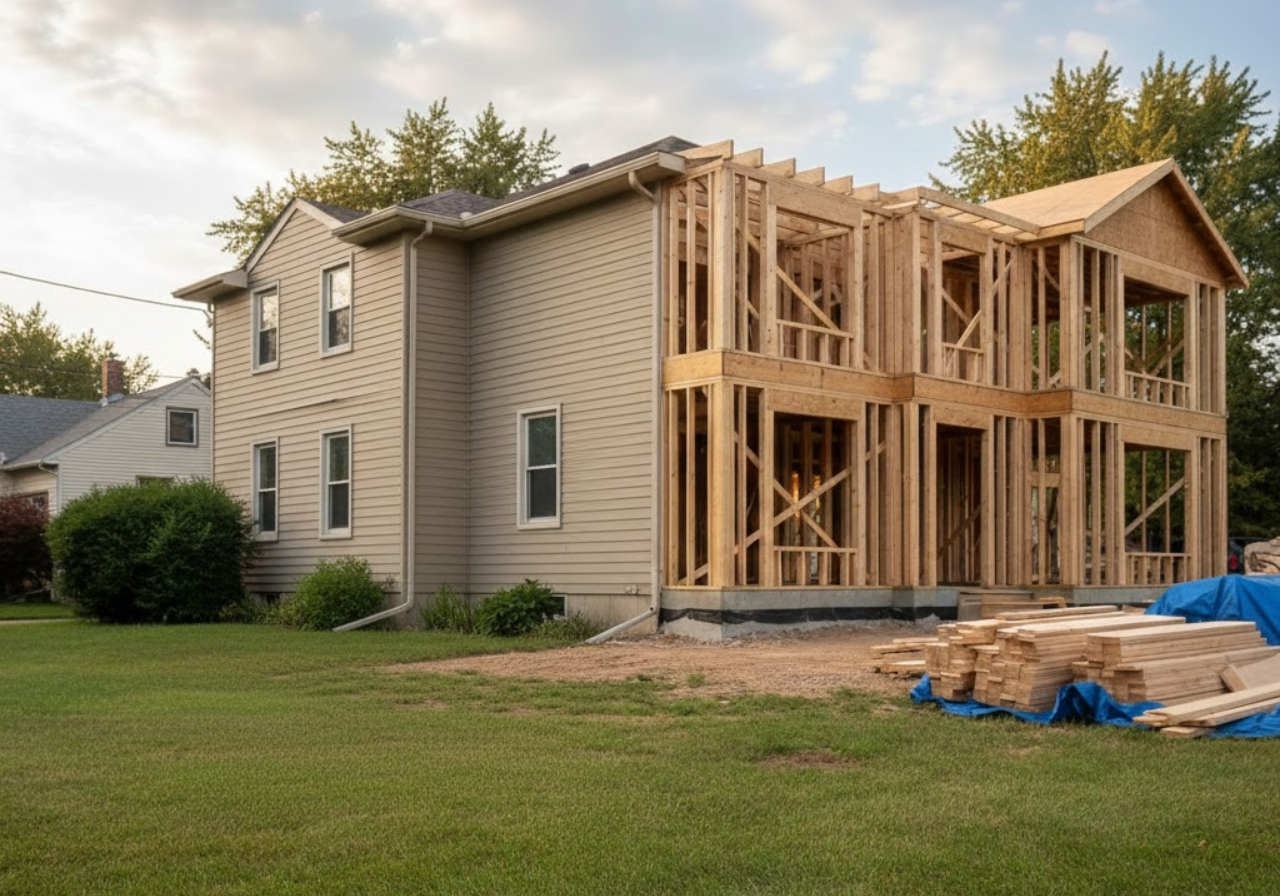
Watching your family outgrow your home brings a tough choice. You can relocate everyone, or you can add the space you need right where you are. Most Western Massachusetts homeowners hit the same wall. They know they want more space, but working with a home addition contractor feels like stepping into unfamiliar territory. What should you expect? How do you know if things are going well or heading sideways?
This free guide for home additions provides a practical checklist. With this, you will know what to ask before signing anything and how to protect yourself before handing over that final check.
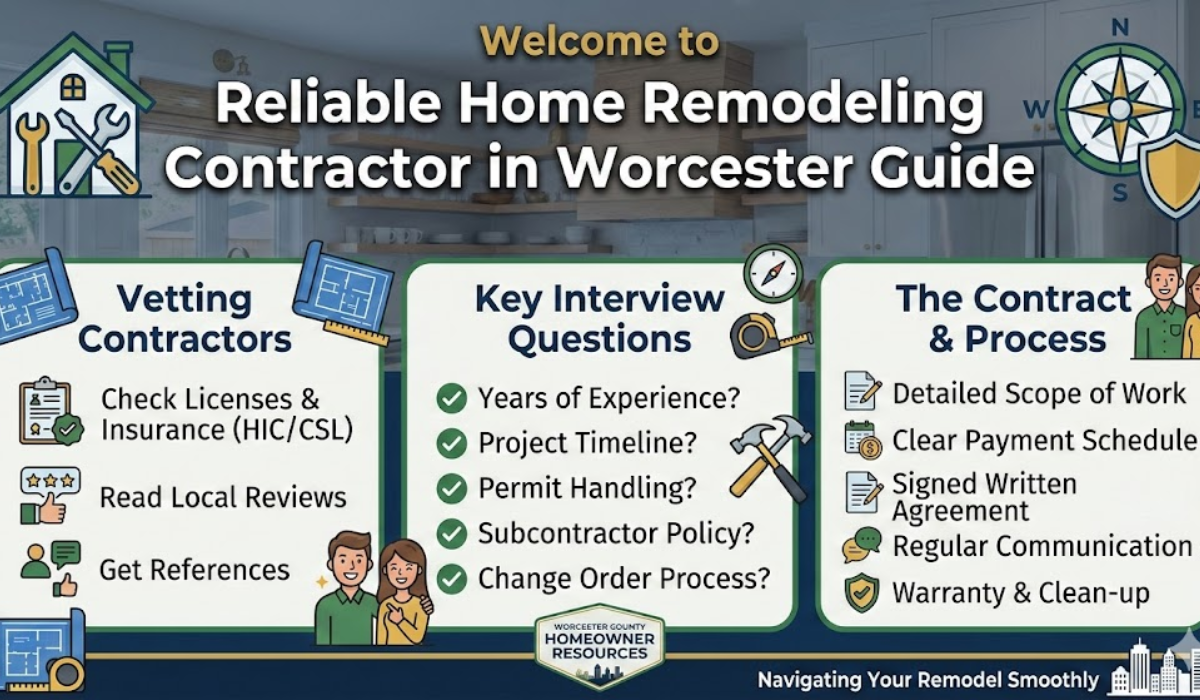
What Should You Look for When Hiring a Home Addition Contractor?
Find an additions contractor who has an active Massachusetts license, is insured, has at least five years of experience with additions in Western Massachusetts, and has satisfied customers who may be asked about the experience. These fundamentals cushion you against future troubles.
The right contractor for building plans room addition matters more than most homeowners realize. You are not buying a product off a shelf. You're choosing someone who'll make dozens of judgment calls about your house over the next several months.
Follow these steps to adding on to your house before you commit:
- A valid contractor's license from Massachusetts plus insurance that covers both liability and workers' compensation
- Five years minimum doing home additions, not just general contracting, with projects you can actually go see
- Three or four recent clients who will pick up the phone and tell you what really happened
- Real photos of finished work, not stock images from the internet
- Standing with the Better Business Bureau or membership in professional groups that actually mean something
Make those calls to past clients. Don't just ask if they're happy. Ask what went wrong and how the contractor fixed it. Every project hits snags. You want someone who solves problems instead of making excuses.
How Do You Navigate the Home Addition Process from Start to Finish from a Contractor?
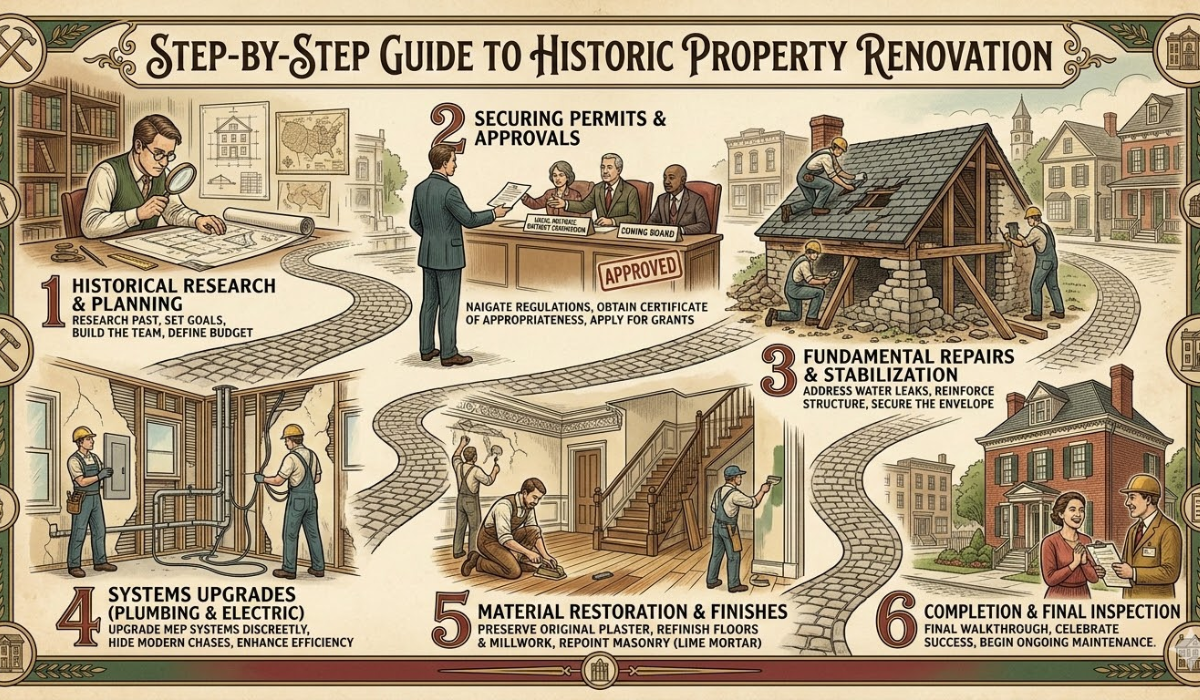
The home addition process has three components, namely planning prior to the commencement of the construction, management of the construction work and finally, proper inspection prior to the final payment.
Staying involved doesn't mean you need to understand roof trusses or electrical codes. It means knowing what's expected next so you can spot when something's off track.
Pre-Construction Planning and Preparation
Nothing physical happens during this phase, but it sets up everything else. Your contractor should be handling permits, finalizing all contract details, and ensuring you both understand exactly what's being built.
Western Massachusetts building departments usually take four to six weeks to review permits. Some towns move faster, some slower. Plan for the longer timeline so you're not waiting to see why work hasn't started yet.
Your contractor needs to finish these addition steps first:
- Obtain all required building permits from your town, including submitting architectural plans and securing official approval, before anyone breaks ground.
- Provide you with a written agreement that details what will be involved, what will be used in making it, when various stages are completed and at what time, you will pay what.
- Discuss with you at your house and walk through the plans with you and mark where work areas will be and answer questions about how this impacts your daily life.
Review the contract addition step by step. Vague phrases like "high-quality materials" are meaningless when you are arguing about whether the cabinets match your expectations. Good contracts name specific brands, colors, and grades.
Active Construction Phase Management
When your crew of contractors arrives, communication will ensure nothing goes wrong. You do not need to go after people to see what is going on and the work site should not appear to be a mess scattered all over your lawn.
The construction period is normally three to six months. That's for a standard room addition. Bigger projects take longer. Western Massachusetts weather will slow things down some months; there's no avoiding it.
Watch for these signs that things are going well:
- Weekly updates by any means that works best: quick phone calls, emails, or paying a visit when the crew is on duty.
- A plan that indicates the time the framing is to be done, when the electricians and plumbers do the rough-in work, when the drywall is to be put in place and when the final details are undertaken.
- Provision of protection over your current house, encompassing confinements to keep dust insulated, your materials kept in a particular location as opposed to being scattered everywhere and cleaning up of your yard every day so that you can use it.
Pay attention to the pace. There are weeks that appear busier than usual. However, when you have the same unfinished job two or three weeks in a row, it is a good sign that there is a scheduling issue on your contractor's side that they are not disclosing.
Final Inspection and Project Completion
This phase protects everything you've paid for. Walk through the finished addition with your contractor before writing that last check. Once the money's gone, fixing problems becomes much harder.
Prepare the final payment by doing these things:
- Take a hands-on inspection of the job: open and close windows, inspect the coverage of the paint in the areas of corner, inspect the meeting of the trim on the wall and test all outlets and light switches.
- Make sure that the building inspector gave a go-ahead on all items and your town also gave you a certificate of occupancy of the new space.
- Get warranty papers for appliances, HVAC equipment, and installed systems plus instructions for maintaining everything.
There are building codes to protect you. The certificate of occupancy verifies that your addition is safe and legally permitted. This step should not be ignored, even if the contractor claims it is unnecessary documentation.
Final Thoughts
The three factors that make it work when using a home addition contractor are conducting your own due diligence, staying engaged throughout the work, and ensuring you are satisfied when it is complete. This three-step framework is inculcated in the three phases of planning, active supervision of the construction process and close scrutiny before final payment.
Keep copies of everything. All the emails, all the change orders, all the receipts. Paper trails prevent future debates about what was actually agreed because memories can be hazy.
Ready to start your addition with people who'll do it right? 3D Home Improvements serves Western Massachusetts homeowners who want quality work and straight answers. Get a free quote right away.
FAQs
What Should I Ask For in a Home Addition Contract?
Get everything in writing: a full scope describing what will be built, itemized costs, a payment schedule with amounts and dates, start and finish dates, specific materials and brands, warranty coverage, and how changes will be handled. No verbal agreements.
How To Plan a Home Addition?
You need to begin by setting your needs and budget and then engage a licensed contractor and architect to produce detailed plans. Obtain building permits at your local building department, complete the material choices and develop a realistic schedule prior to the start of construction.
How To Build an Addition on a House?
Additional construction requires permits, a licensed builder, site and foundation preparation, frame construction, utilities, roofing, exterior finishing, interior completion, and final inspection until the building is occupied.
How Long Does a Typical Home Addition Take in Western Massachusetts?
Four or six months to move in after permit approval. Smaller additions may be completed in three months. Bigger ones can go beyond six. Timing is influenced by weather, material delays and the nature of the structural work.
How To Build an Addition To Your Home?
Hire an experienced home addition contractor to do permits, architectural plans, construction phases such as foundation and framing, and subcontractor coordination of electrical and plumbing work, and also to make sure that all work meets the local building codes by having inspections.
How To Build an Addition?
Constructions need the right permissions, certified workers, preparation of the site, foundation, structural framing, installation of utilities, exterior, interior finishing and last inspections. The majority of additions require three to six months, based on the magnitude and complexity of the project.